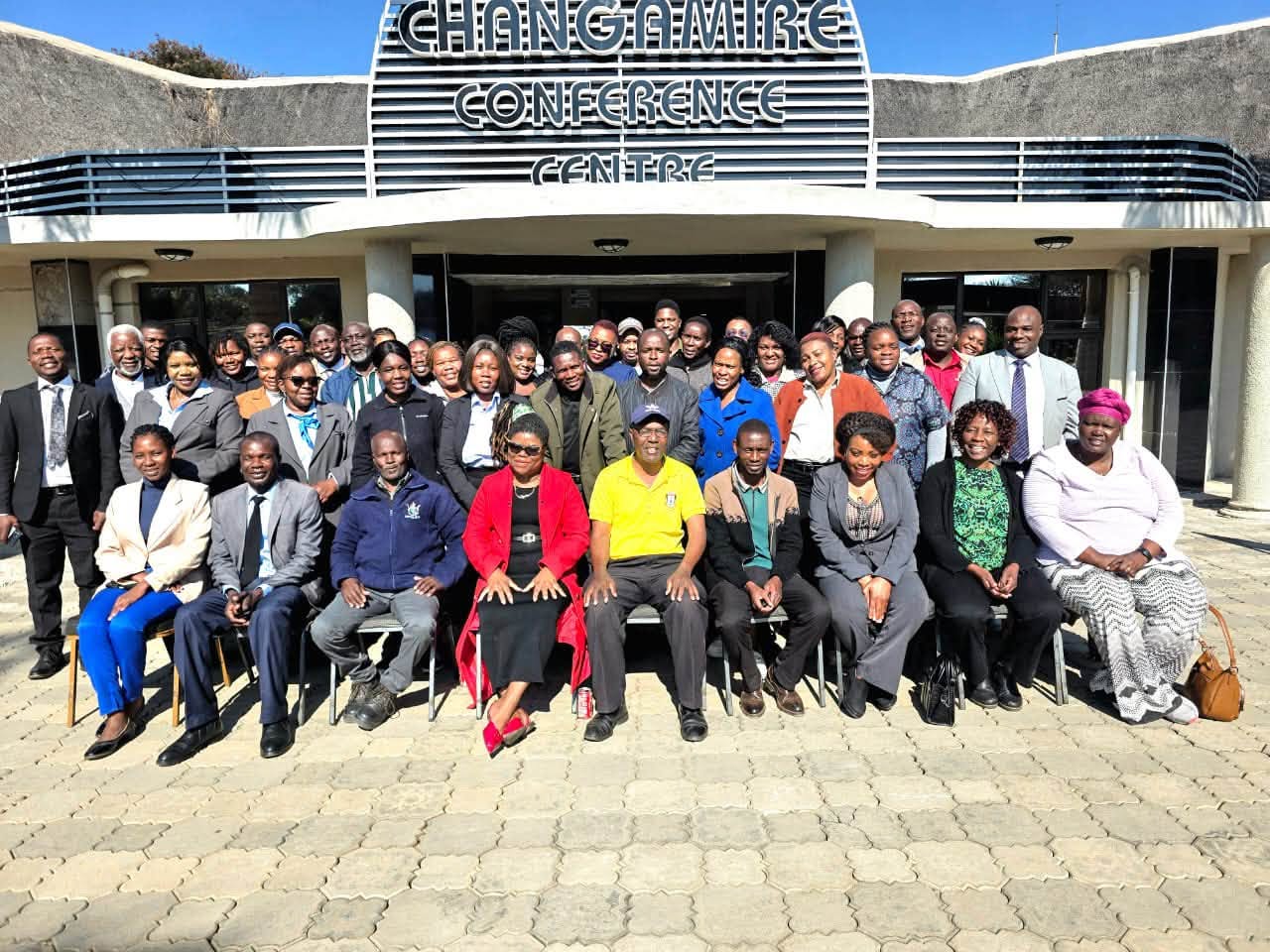
Welcome to the 
National Employment Council for the Catering and Hotels Industry.

Our Services

Our services are world class
and promote industrial harmony

Labour Dispute
Settlement

Labour
Inspections

Collective Bargaining

Trainings and Awareness

Who We are

Helping you to strive with industrial relations in the Catering Industry.

The NEC Catering Industry of Zimbabwe endeavours to become the best labour market institution promoting collective bargaining, good governance and industrial harmony in the Catering Industry. 

Why choose us?

We promise to give you the best service
you will ever need

Vision

To be the premier labour market institution in Zimbabwe advancing fair labour standards, ethical governance and sustainable collective bargaining in Zimbabwe

Mission

To drive labour practices, enhance social protection and deliver high- quality council services that provide stability, productivity and growth in the catering and hospitality sector.

Values

Honesty, Transparency, accountability, Professionalism, Quality, Respect, equality

Membership

We’ve got you covered

The NEC is a statutory board; any business whose business falls within the scope of the catering industry is expected to register with the NEC.  The General Secretary shall maintain a register of all employees according to the CBA.  The following is required for registration.

Frequently Asked Questions

The organization can apply for exemption to the NEC exemption committee from paying the prescribed minimum wages in terms of clause 5 of the Collective Bargaining Agreement, Statutory Instrument 25 of 2022 as read in conjunction with section 12D of the Labour Act Chapter 28:01. Employees on exemptions should not receive less than fifty per centum of his current weekly or monthly wage. 

  • If the employer and employees agree on exemption at the workplace, they should notify NEC with a bona fide written and signed agreement by both parties to do so.
  • The signed agreement should clearly indicate the full terms and conditions of the agreement such as nature of exemption, date of implementation and duration. The agreement should also indicate the rate or percentage of salary reduction. NB employee should not receive less than fifty per cent of his current weekly or monthly wage.. The agreement should be submitted not later than fourteen days after the employer begins implementing the agreement
  • If there is no agreement , the employer apply to NEC indicating reasons for exemptions and attaching audited financials, minutes of works council or with workers and any other supporting documents

Overtime worked on normal days is paid at one and half times the employee’s current hourly wage

Overtime worked on day off or public holiday shall be paid at double the employee’s current hourly  wage or substitute an additional day off within the fortnight

Overtime shall be paid at least once every month and by not later than the last day in each month. For weekly paid employees by not later than Saturday and fortnightly paid employees not later than each alternate Saturday.
Lorem ipsum dolor sit amet, consectetur adipiscing elit. Ut elit tellus, luctus nec ullamcorper mattis, pulvinar dapibus leo.
  1. Permanent/ full time
  2. Casual-works less than 20 hours per week at irregular intervals i.e as and when the work is available, paid double hourly rate of pay of permanent employees. Other benefits as leave do not accrue
  3. Part time-Contract should be reduced in writing, maximum hours per week is 30 hours, work more regular than casual, other benefits as leave accrue